
My Aadhaar UIDAI Login – Easy Download & Check Status 2026
The Unique Identification Authority of India (UIDAI) oversees the Aadhaar project, which provides a 12-digit unique identity number to Indian residents. Established by the Government of India in 2009, UIDAI manages key Aadhaar services through the My Aadhaar portal, offering a streamlined approach for citizens to download e-Aadhaar, update personal details, and track their status. The platform also supports features like generating a Virtual ID (VID), ordering PVC Aadhaar cards, and checking Aadhaar status—all designed to simplify processes for users.
Aadhaar UIDAI services help users easily access essential Aadhaar-related information and guidance online. As one of the world’s largest biometric identity systems, Aadhaar connects residents to various government services, banking, and mobile communications, ensuring nationwide accessibility. Through its continuous updates and mobile-friendly services, UIDAI ensures a secure and accessible experience for all users, reinforcing India’s push towards digital governance. With key features like biometric authentication and digital verification, the platform enhances transparency and safeguards against identity fraud, making it an integral part of daily life for millions of Indians.
Aadhaar Services
Access comprehensive Aadhaar services online. Update details, Aadhaar card download, track status, and more.
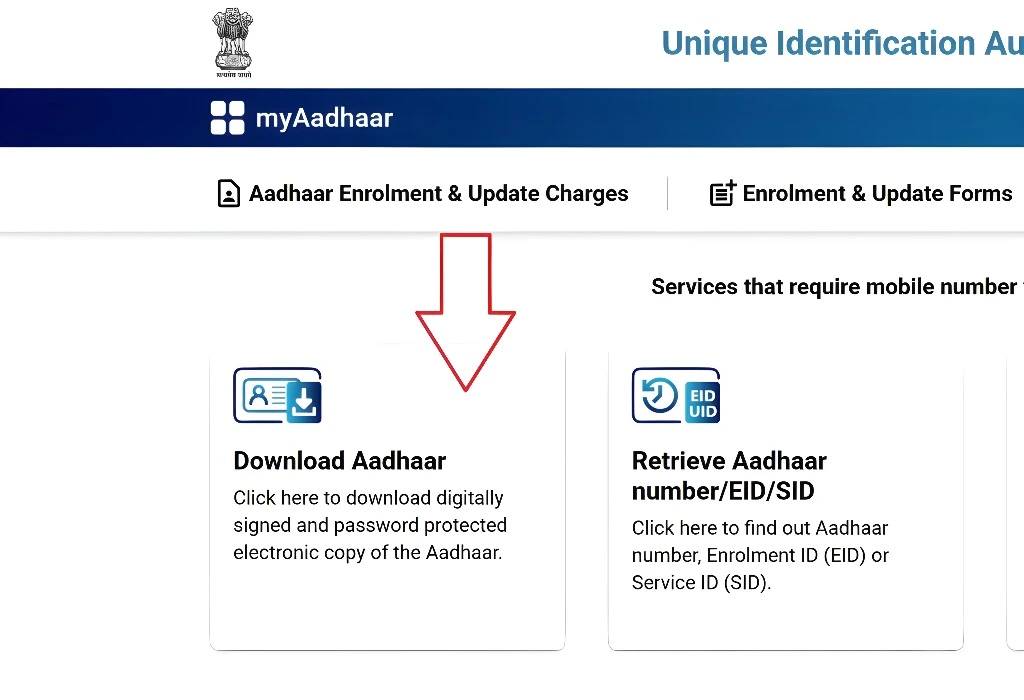
My Aadhaar
Access personal Aadhaar dashboard.
UIDAI
Official UIDAI portal.
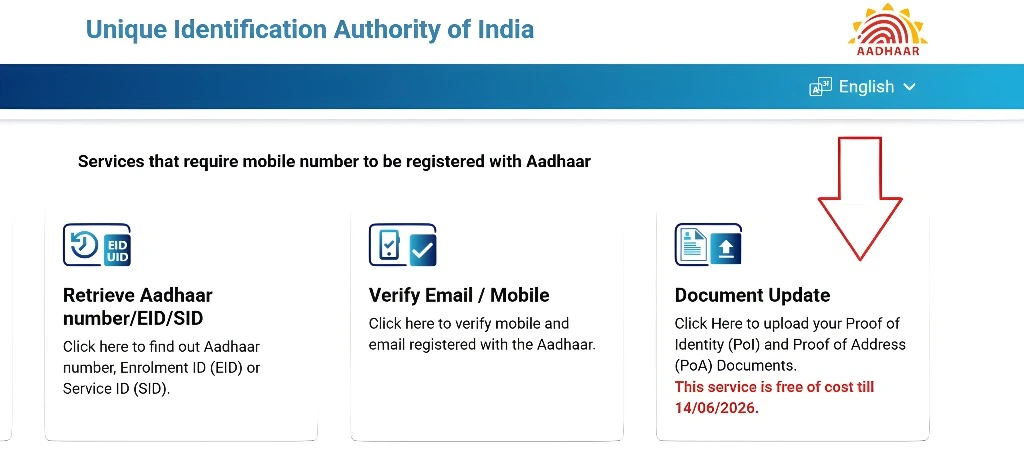
Update Aadhaar Details
Update identity or address documents online.
Check Enrollment/Update Status
Track your Aadhaar enrollment progress.
Retrieve EID / Aadhaar Number
Recover Aadhaar or enrollment ID.
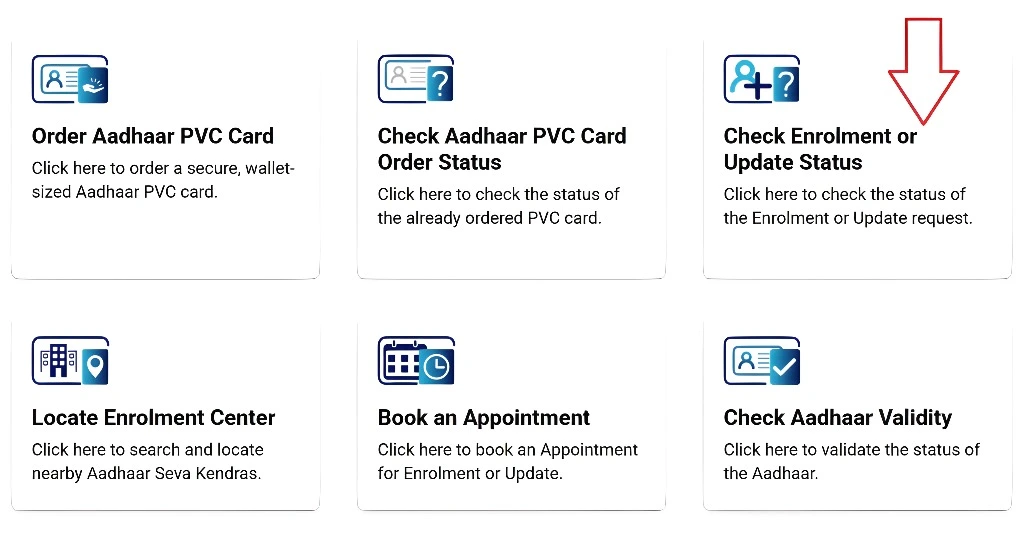
Order Aadhaar PVC Card
Request a durable PVC Aadhaar card.
Check PVC Card Status
Track delivery of your PVC card.
Locate Enrollment Center
Find nearby Aadhaar centers.
Book an Appointment
Schedule a visit for Aadhaar services.
Check Aadhaar Validity
Verify if your Aadhaar is active.
Verify Email / Mobile Number
Confirm linked email and mobile number.
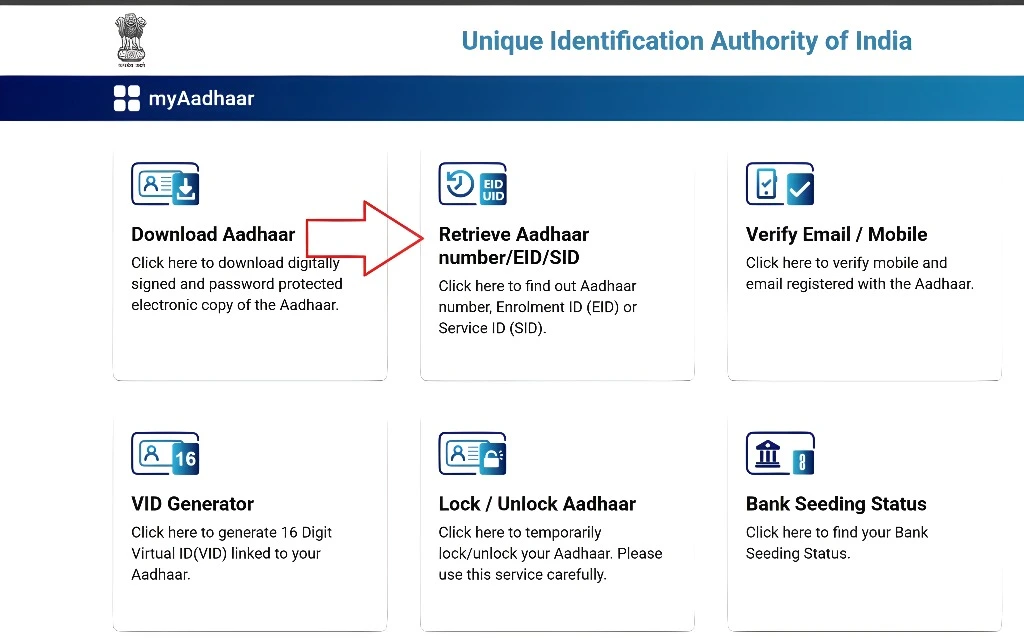
Generate or Retrieve VID
Generate 16-digit Virtual ID (VID).
Key Features of Aadhaar
Every resident is assigned a unique Aadhaar number.
Fingerprints, iris scans, and photographs verify identity.
Subsidies and welfare payments directly transferred to Aadhaar-linked bank accounts.
Simplifies online verification for banking, mobile services, and more.
Residents can update name, address, and other details online until June 2026.
Enables financial transactions using biometric authentication, especially in rural areas.
A durable, wallet-sized version available for online ordering.
Data is encrypted, and users can lock or unlock biometrics for added security.
Aadhaar is valid nationwide and can be accessed digitally anytime, anywhere.
Enhances privacy by masking the original Aadhaar number during transactions.
Aadhaar Services Offered by UIDAI
The Unique Identification Authority of India (UIDAI) offers a wide array of services to simplify the management of Aadhaar cards. These services include downloading e-Aadhaar, updating details, retrieving Aadhaar numbers, generating Virtual IDs, and ordering the PVC Aadhaar card, all available through the official My Aadhaar UIDAI Portal.
Key Services Provided by UIDAI:
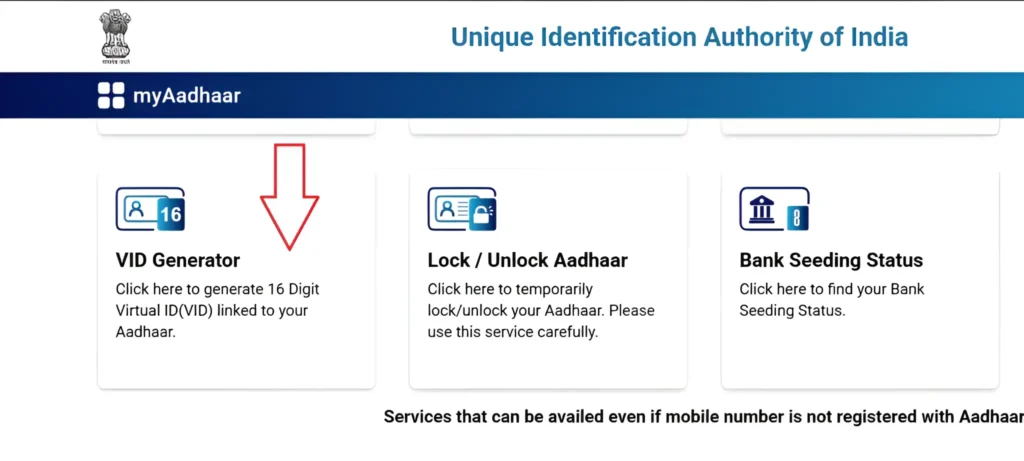
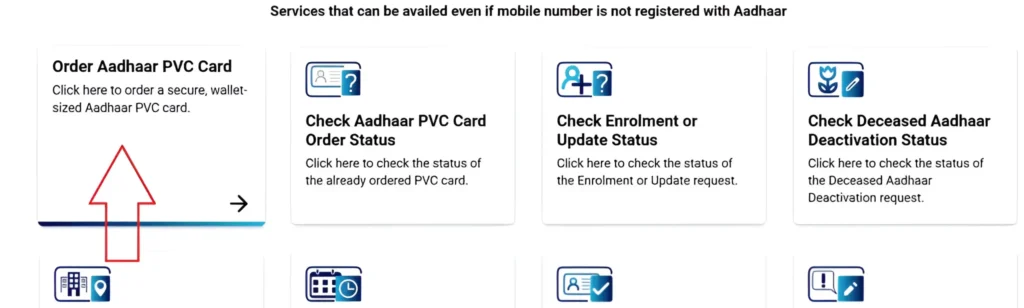
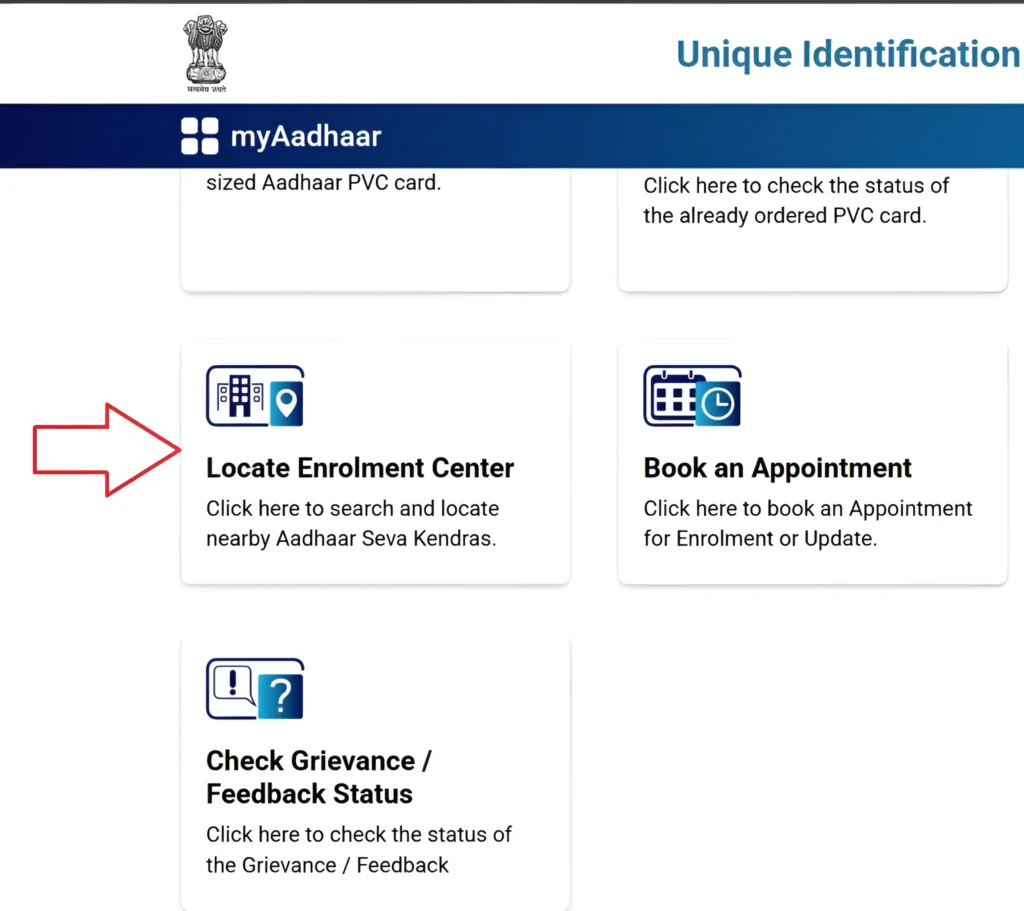
Important Notes:
Services for Enhanced Privacy:
Additional Benefits of Downloading e-Aadhaar
What is e-Aadhaar?
e-Aadhaar is the digital version of your physical Aadhaar card, issued by the Unique Identification Authority of India (UIDAI). It is a password-protected PDF file that contains all the same information as the physical Aadhaar, including your 12-digit Aadhaar number, name, date of birth, gender, and address. The e-Aadhaar is digitally signed by UIDAI, ensuring its authenticity and making it legally valid for all official purposes, just like the physical card. You can access and download your e-Aadhaar through the My Aadhaar Portal.
Key Features of e-Aadhaar:
Note: According to the Aadhaar Act 2016, e-Aadhaar holds the same validity as the physical Aadhaar card, making it a secure, convenient, and legal alternative for official use.
Eligibility & Requirements for e-Aadhaar Card Download (Online PDF)
To download your e-Aadhaar, you must meet certain eligibility criteria and have specific details ready for verification. Below is a summary of who is eligible and the required documents for accessing your e-Aadhaar.
Eligibility for e-Aadhaar Download:
Indian Residents: Any individual who has successfully completed Aadhaar enrolment and whose Aadhaar number has been generated is eligible.
Non-Resident Indians (NRIs): NRIs who have an Aadhaar number and whose mobile number is linked to their Aadhaar are also eligible to download the e-Aadhaar.
Minors: Children with Aadhaar can have their e-Aadhaar downloaded by their parents or guardians, using the child’s Aadhaar number or Enrolment ID (EID).
Note: If your Aadhaar is still under processing after enrolment, you can only check the status of your Aadhaar and not download it until the generation process is complete.
Methods to Download Your Aadhaar Card
UIDAI provides four primary methods to download your e-Aadhaar, each requiring OTP verification for security. Below are the detailed steps for each method, ensuring you can choose the one that best suits you.
1.Via UIDAI My Aadhaar Portal
The My Aadhaar UIDAI portal (https://myaadhaar.uidai.gov.in/) is the official and most reliable method for downloading your Aadhaar card.
Steps:
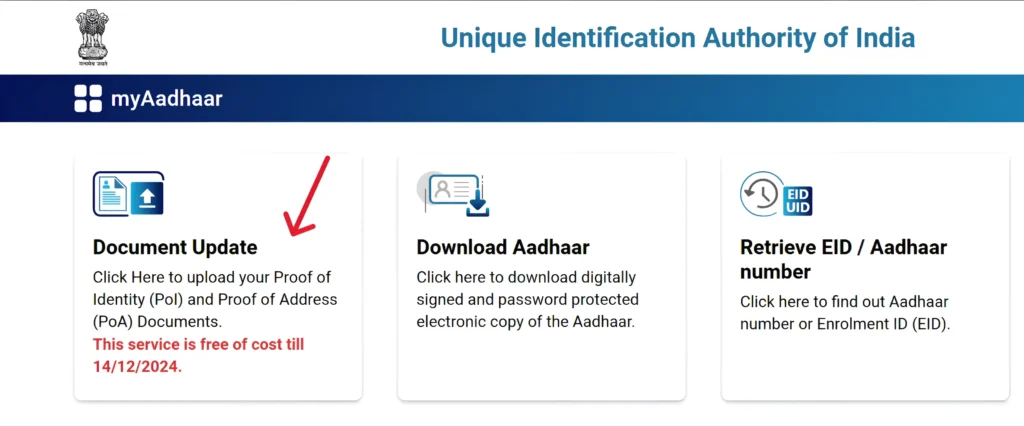
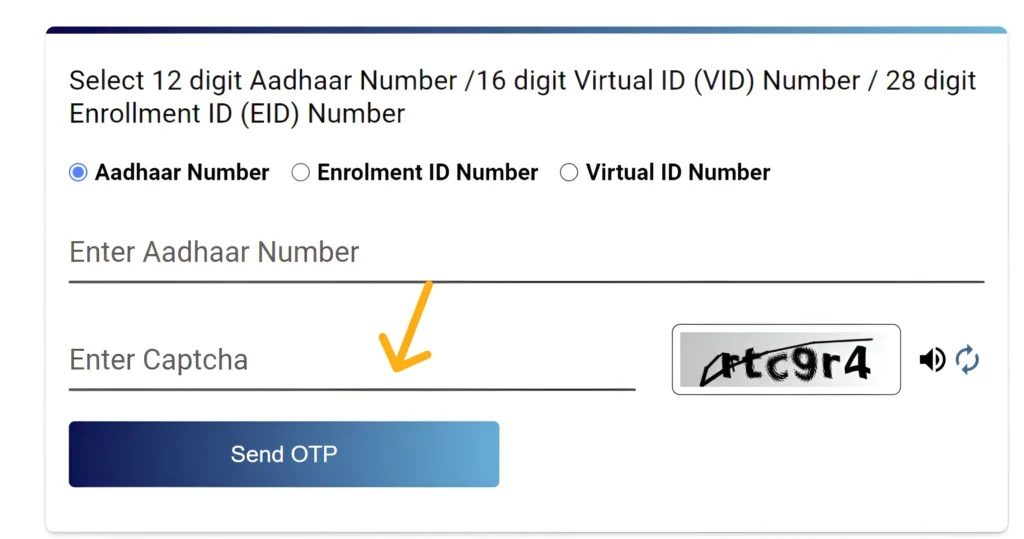
Password for PDF: The password is a combination of the first four letters of your name (in CAPITALS) + birth year.
Example: Name: “VISHAL KUMAR” and Birth Year: “1990”, the password will be VISH1990.
2.Via mAadhaar App
The mAadhaar app is available for both Android and iOS, offering a mobile-friendly method to manage and download your Aadhaar.
Steps:
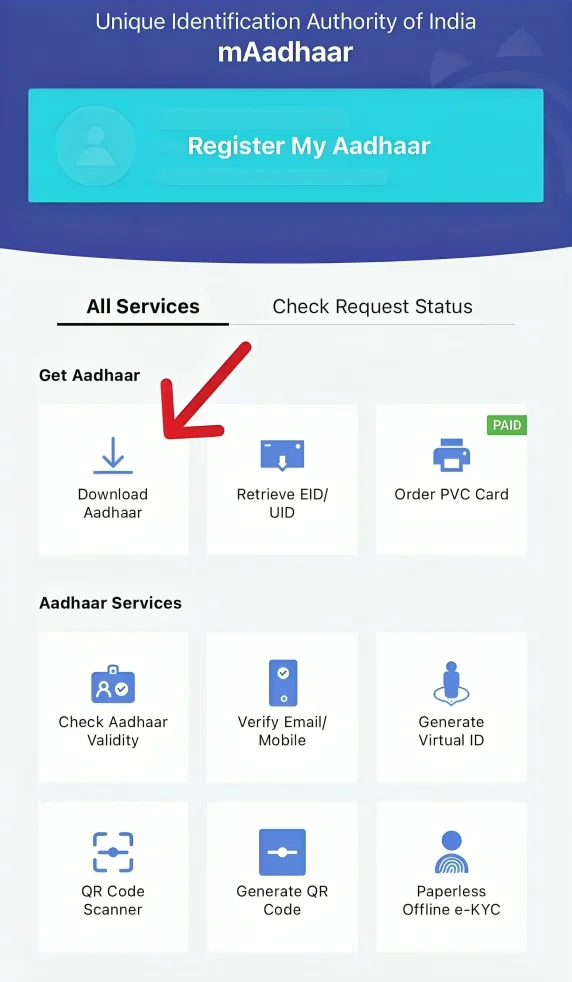
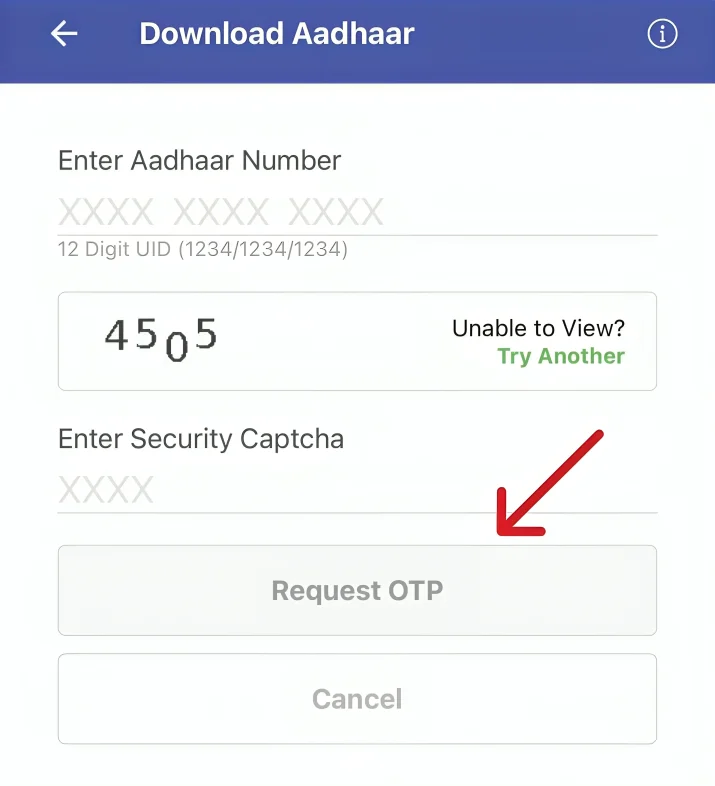
Additional Features: The app supports retrieving EID/VID, ordering PVC cards, checking Aadhaar validity, and more. It also allows managing up to three profiles for family members.
3.Via DigiLocker
DigiLocker is a digital document storage platform where you can download your Aadhaar card along with other official documents.
Steps:
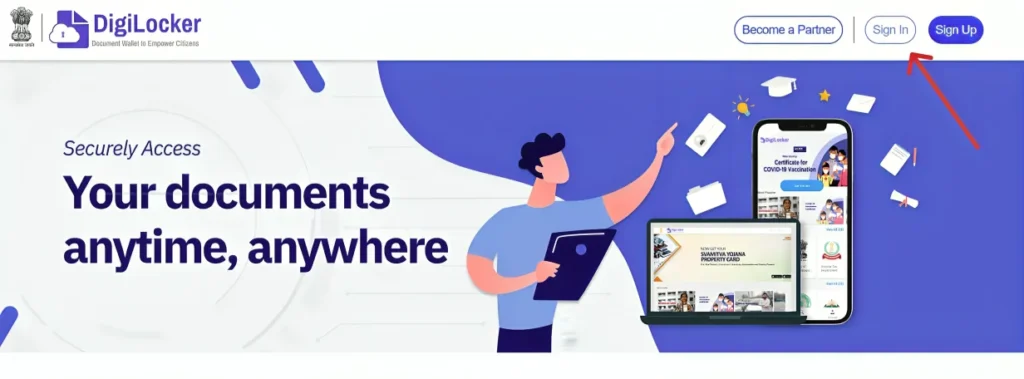
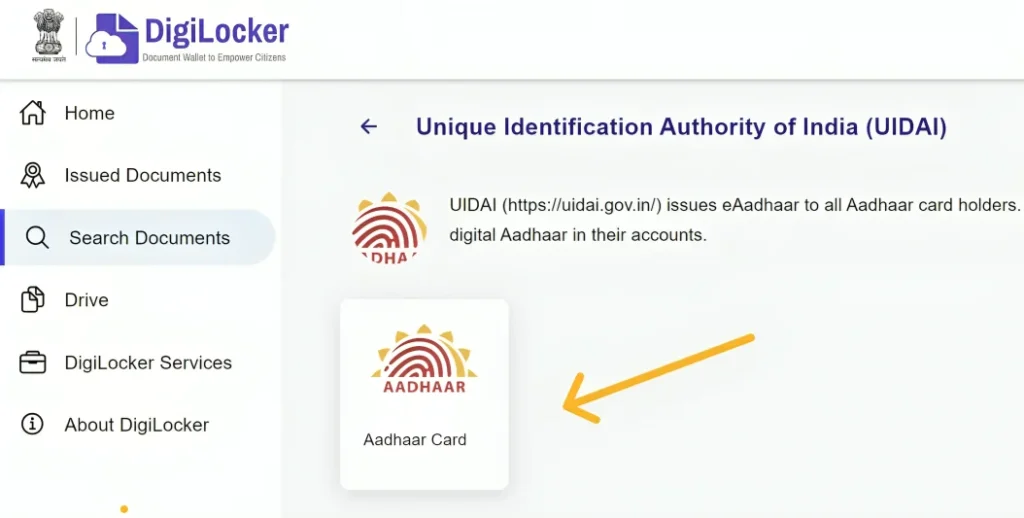
Note: New users must create an account using mobile or email. DigiLocker is ideal for users already managing other documents.
4.Via UMANG Portal
UMANG (Unified Mobile Application for New-age Governance) offers access to Aadhaar downloads along with various other government services.
Steps:
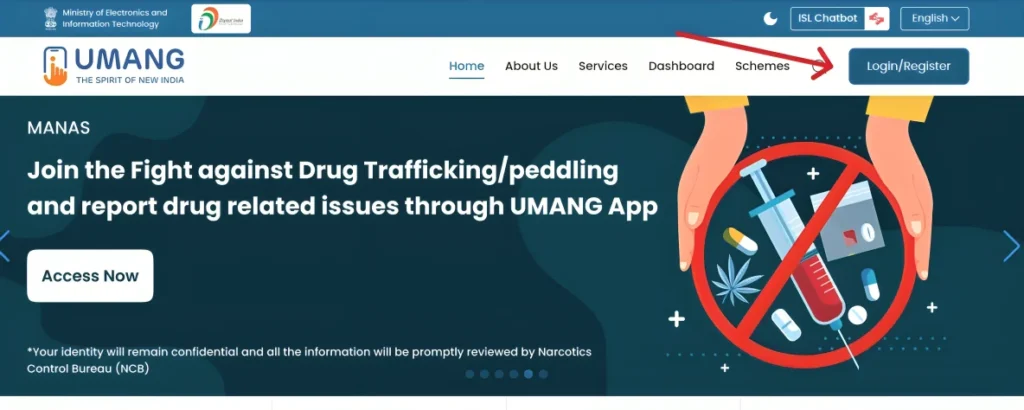
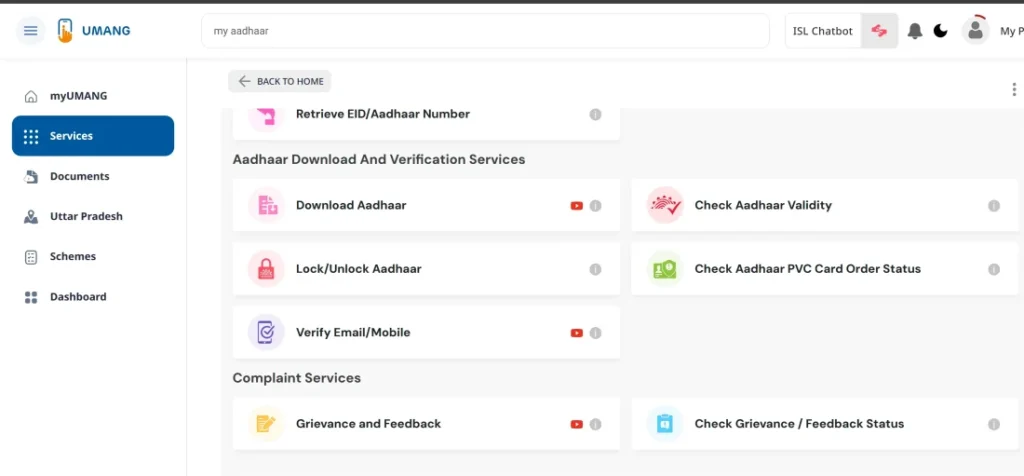
MyAadhaar Login Process
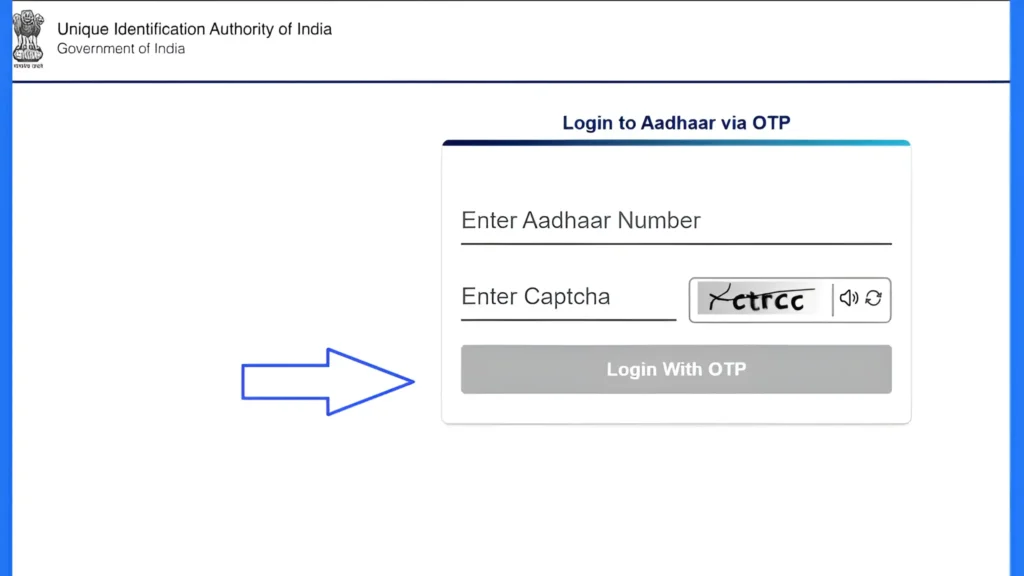
The My Aadhaar UIDAI portal allows users to securely access their Aadhaar services using their unique 12-digit Aadhaar number and an OTP (One-Time Password). This login process is essential for updating personal information, checking Aadhaar status, and utilizing various UIDAI services.
Login Steps (My Aadhaar UIDAI Portal):
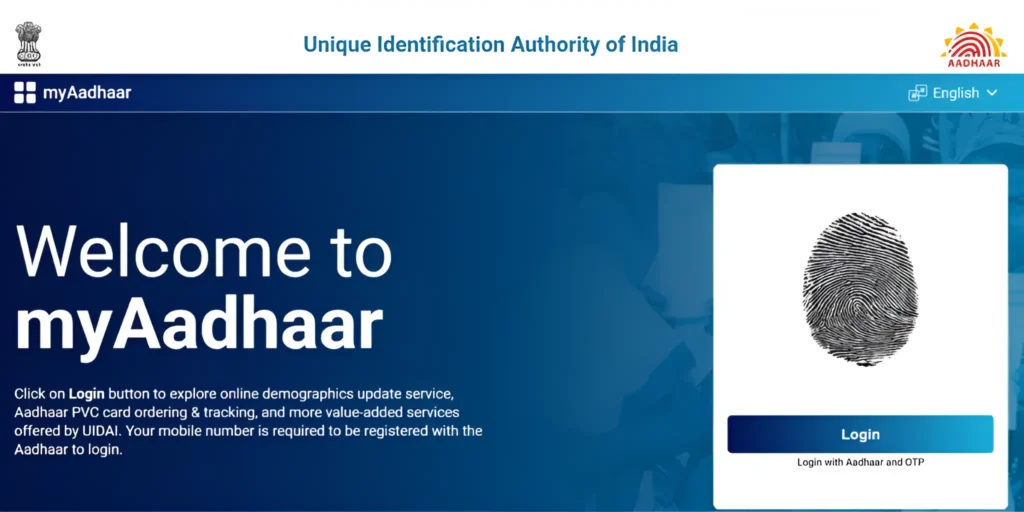
Required Documents for My Aadhaar UIDAI Login
When applying for an Aadhaar card or updating Aadhaar details, various documents are required to prove your identity, address, date of birth, and relationship. Below is a breakdown of the documents needed for each category:
1.Proof of Identity (PoI)
These documents establish your identity for Aadhaar registration or update:
| Document | Type |
| Passport | Identity Proof |
| Voter ID Card (EPIC) | Identity Proof |
| PAN Card | Identity Proof |
| Driving License | Identity Proof |
| Ration Card (with photo) | Identity Proof |
| Public Service Identity Card | Identity Proof |
| Government Employee ID Card | Identity Proof |
| Bank Passbook/Kisan Passbook (with photo) | Identity Proof |
| ID Card from a Recognized Educational Institution | Identity Proof |
2.Proof of Address (PoA)
These documents verify your residential address for Aadhaar:
| Document | Type |
| Passport | Address Proof |
| Voter ID Card | Address Proof |
| Bank Passbook/Account Statement | Address Proof |
| Electricity Bill, Water Bill, Gas Bill (valid up to 3 months old) | Address Proof |
| Telephone/Mobile Bill | Address Proof |
| Driving License | Address Proof |
| Ration Card | Address Proof |
| Income Tax Assessment Order | Address Proof |
| Insurance Policy Document | Address Proof |
| Government-issued Residence Certificate | Address Proof |
3.Proof of Date of Birth (PoDoB)
Documents used to prove your date of birth:
| Document | Type |
| Birth Certificate | Date of Birth |
| Passport | Date of Birth |
| Matriculation (10th) Certificate | Date of Birth |
| PAN Card | Date of Birth |
| Date of Birth Certificate issued by a Government/Authorized Officer | Date of Birth |
4.Proof of Relationship (PoR)
Used to establish familial relationships for Aadhaar enrollment or update:
| Document | Type |
| Ration Card | Relationship Proof |
| Passport | Relationship Proof |
| Birth Certificate (Parents) (with name) | Relationship Proof |
| Family Register/Marriage Certificate | Relationship Proof |
| Pension Card | Relationship Proof |
| For Children: Birth Certificate, Guardian’s Aadhaar Card (Mother/Father), Discharge Slip (if applicable) | Relationship Proof |
5.Documents Required for Aadhaar Card Update of Children (Up to 5 Years Old)
For children under 5 years, specific documents are required for Aadhaar enrollment or updates:
| Document | Relationship Proof | Date of Birth Proof |
| Birth Certificate | Yes | Yes |
| Indian Passport (NRIs) | Yes | Yes |
| Legal Guardianship Document | Yes | No |
6.Documents for Individuals Above 5 Years
For residents aged 5 and above, a variety of documents are needed for Aadhaar enrollment or updates. Here’s a handy chart:
| Document Type | Document Category | Accepted Documents |
| Proof of Identity (PoI) | Proof of Identity | PAN Card, Passport, Voter ID, etc. |
| Proof of Address (PoA) | Proof of Address | Bank Passbook, Utility Bills, Ration Card, etc. |
| Proof of Relationship (PoR) | Proof of Relationship | Family Entitlement Document, Legal Guardianship, etc. |
| Proof of Date of Birth (PoDoB) | Proof of Date of Birth | Birth Certificate, Educational Certificates, etc. |
7.Documents for Foreign Nationals
If you’re not an Indian citizen but need to update your Aadhaar, here’s what you can use:
| Document | ID Proof | Address Proof |
| OCI Card + Foreign Passport | ✔ | ✖ |
| LTV + Foreign Passport | ✔ | ✔ |
| Passport of Nepal/Bhutan | ✔ | ✖ |
| Visa + Foreign Passport | ✔ | ✖ |
| FRRO/FRO Registration Certificate | ✖ | ✔ |
New Aadhaar App
The Unique Identification Authority of India (UIDAI) has launched an upgraded Aadhaar mobile app, designed to improve the convenience, security, and privacy of managing Aadhaar digitally. This app is distinct from the mAadhaar app, offering enhanced features that support better identity management for Indian residents.
Key Features of the New Aadhaar App:
Secure Digital Aadhaar Storage:
The app enables users to securely store their Aadhaar profile on their smartphone, removing the need to carry a physical Aadhaar card for identity verification in daily life.
Multi-Profile Management:
You can add up to five Aadhaar profiles on a single device, provided the Aadhaar numbers are linked to the same registered mobile number. This feature is particularly helpful for families, allowing easy management of Aadhaar details for all members on one phone.
Face & Biometric Security:
After OTP verification, the app supports face authentication and biometric lock/unlock, providing stronger security to protect Aadhaar data on the phone against unauthorized access.
Selective Data Sharing:
The app allows users to choose what information to share during identity verifications, such as name and photo, without revealing more sensitive data like address or date of birth. This feature enhances privacy protection.
QR Code & Offline Verification:
The app generates a QR code that can be scanned for secure identity checks. Many features, including QR-based verification, are available offline once the profile is set up.
Activity Log:
The app maintains an activity log that tracks when and where your Aadhaar was used for authentication, offering increased transparency and security.
Mobile Number and Address Update:
One of the standout features is the ability to update your mobile number and address directly within the app, reducing the need to visit Aadhaar centres. Verification for updates requires OTP or face authentication.
This new Aadhaar app brings significant improvements in accessibility, security, and user control, making it easier for Indian residents to manage their Aadhaar digitally while ensuring stronger protection of personal data.
How to Book an Appointment for Aadhaar Services
Booking an appointment for Aadhaar services can help you avoid long queues at Aadhaar Seva Kendras or other centres that provide Aadhaar services. Here’s a step-by-step guide to make the process easier.
Steps to Book an Appointment:
- Visit the UIDAI Website:
- Go to the official UIDAI portal and select the “Book an Appointment” option.
- This will direct you to the appointment portal.
- Select Your Location:
- Choose your State and City/Location from the dropdown menu.
- Then, select the Aadhaar centre where you wish to book the appointment.
- Choose the Service:
- Select the service you require, such as New Enrolment or Update (demographic/biometric).
- Enter Your Mobile Number:
- Provide your mobile number to receive an OTP for verification.
- Enter the OTP to proceed with the booking.
- Select Date and Time Slot:
- Choose an available date and time slot for your appointment.
- Make sure the timing works for you to avoid any delays.
- Confirm and Download Appointment Slip:
- Once confirmed, download your appointment slip/ID.
- You will also receive an SMS confirmation with all the appointment details.
- Visit the Centre on Time:
- On the day of the appointment, visit the Aadhaar Seva Kendra with all the necessary documents and your appointment slip.
Aadhaar and UIDAI: Overview and Latest Updates
Aadhaar Overview:
Aadhaar Applications
| Application | Use |
| Financial Inclusion | Simplifies KYC for opening bank accounts, buying mutual funds, and acquiring insurance. |
| Direct Benefit Transfer (DBT) | Enables subsidies like LPG, PM-KISAN, and Ayushman Bharat to be delivered directly to Aadhaar-linked bank accounts. |
| Digital Services | Supports Aadhaar-enabled Payment System (AePS), UPI, and e-Governance platforms. |
| Other Uses | Used for telecom SIM activation, passport applications, education verification, and more. |
UIDAI Overview
| Mandate | Description |
| Issue Unique Aadhaar Numbers | To residents of India for identification. |
| Maintain CIDR | The Central Identities Data Repository, a secure database for Aadhaar data. |
| Authentication Services | To provide real-time authentication for identity verification. |
| Privacy and Security | Ensure privacy, security, and compliance with legal frameworks. |
| Promote Inclusion | Facilitate access to services for marginalized groups. |
UIDAI Organizational Structure
| Category | Details |
| Headquarters | New Delhi, with regional offices in Bengaluru, Mumbai, Hyderabad, and other cities. |
| Leadership | Chairperson: Neelkanth Mishra; CEO: Saurabh Vijay (appointed by the Government of India). |
| Operations | Manages Aadhaar Seva Kendras (ASKs), Permanent Enrolment Centres (PECs), and digital platforms like the myAadhaar portal and mAadhaar app. |
| Helpline | Toll-free number: 1947, available in multiple languages. |
| Email Support | help@uidai.gov.in |
Latest Aadhaar Updates
Aadhaar Update Charges Revised — Effective from 1 October 2025
The Unique Identification Authority of India (UIDAI) has revised the charges for Aadhaar enrolment and update services, effective from 1 October 2025. The revision will take place in two phases to ensure that Aadhaar service centres are properly compensated, while maintaining affordability for residents. Below is the detailed breakdown of the updated charges:
Aadhaar Services and Charges (Effective up to 30.09.2028)
| Aadhaar Service | Registrar Fee (₹) | Resident Fee (₹) |
| Aadhaar enrolment (0–5 years) | 75 | Free |
| Aadhaar enrolment (Above 5 years) | 125 | Free |
| Mandatory biometric update (5–7 & 15–17 yrs) | 125 | Free |
| Aadhaar enrolment (Above 5 yrs – special case) | – | 125 |
| Other biometric update | – | 125 |
| Demographic update (online / centre) | – | 75 |
| PoA/PoI update at enrolment centre | – | 75 |
| PoA/PoI update via myAadhaar (SSUP) | – | 75 |
| Aadhaar search & colour print (A4) | – | 40 |
Aadhaar Services and Charges (Effective from 01.10.2028 to 30.09.2031)
| Aadhaar Service | Registrar Fee (₹) | Resident Fee (₹) |
| Aadhaar enrolment (0–5 years) | 90 | Free |
| Aadhaar enrolment (Above 5 years) | 150 | Free |
| Mandatory biometric update (5–7 & 15–17 yrs) | 150 | Free |
| Mandatory biometric update (7–15 yrs & 18+) | – | 150 |
| Other biometric update | – | 150 |
| Demographic update (online / centre) | – | 90 |
| PoA/PoI update at enrolment centre | – | 90 |
| PoA/PoI update via myAadhaar (SSUP) | – | 90 |
| Aadhaar search & colour print (A4) | – | 50 |
UIDAI’s Role and Duties
The Unique Identification Authority of India (UIDAI) is tasked with the implementation and management of the Aadhaar program. Here are the core responsibilities and duties of UIDAI:
Issuance of Aadhaar Numbers: UIDAI assigns Aadhaar numbers to Indian citizens, providing them with a unique 12-digit identification number.
Management of Central Database (CIDR): UIDAI oversees the Central Identities Data Repository (CIDR), which is the secure database for all Aadhaar-related information.
Identity Verification: UIDAI confirms your identity when required, using biometric and demographic data.
Data Security and Privacy: UIDAI ensures that the security and privacy of Aadhaar holders’ personal information are maintained at all times.
Promoting Social Inclusion: UIDAI facilitates access to services for marginalized groups, ensuring that Aadhaar helps in promoting financial and social inclusion across the nation.
These duties aim to provide a secure and accessible platform for identity verification, empowering residents of India while safeguarding their privacy.
How UIDAI Handles 1.3 Billion Users with Security and Speed
UIDAI serves over 1.3 billion Aadhaar holders across India by balancing security and speed, ensuring the system remains functional even at a massive scale. Here’s how UIDAI manages this impressive infrastructure:
Distributed Infrastructure
UIDAI leverages a network of data centers and zonal offices to ensure smooth operation. Instead of relying on a single server, the data is load-balanced across various zones, which helps in faster responses and prevents server overload, ensuring seamless access to Aadhaar services.
Real-time Monitoring
UIDAI employs automated monitoring systems to track authentication activities in real time. For instance, if ten authentication attempts fail in a minute, the system raises a silent security flag, ensuring any suspicious activity is immediately flagged without compromising user experience.
Session Expiry and Access Limitation
Expiry timers are set for every Aadhaar authentication session, ensuring that the window for abuse is minimized. If the session is not in use, it resets automatically, limiting the time an attacker has to misuse the system.
Efficient Document Management
Aadhaar is critical for identity verification, proof of address, and accessing services such as banking, mobile phone connections, and government programs. To facilitate efficient management of Aadhaar cards, residents can easily manage their Aadhaar through the MyAadhaar portal, following the provided instructions.
This robust system enables UIDAI to serve users across diverse regions—from rural Jharkhand to urban Delhi—while maintaining real-time efficiency, security, and scalability.
What UIDAI Is Planning Next
UIDAI is continuously innovating to enhance the Aadhaar system and make it more accessible, secure, and user-friendly. Here are some key developments in the pipeline:
Expanding Facial Authentication
UIDAI is expanding the use of facial authentication for Aadhaar login, particularly in sectors like telecom and insurance. This technology will allow older and disabled users to verify their identities easily, eliminating the need for fingerprints, one-time passwords (OTPs), and other complex procedures.
Growing Use of Offline Aadhaar QR Codes
Offline Aadhaar QR codes are gaining traction as an alternative method for identity verification. The mAadhaar app now supports offline QR code verification, which is accepted by government offices and hospitals. This innovation allows users to verify their identities without the need for an internet connection or OTP, making Aadhaar services more accessible and reducing reliance on connectivity.
Potential Smartwatch Integration
UIDAI is exploring the possibility of integrating Aadhaar with smartwatches, marking a significant step in wearable digital identity innovation. This feature could help visually impaired individuals authenticate themselves easily, empowering them with self-authentication capabilities.
These upcoming features reflect UIDAI’s commitment to enhancing accessibility and streamlining the Aadhaar verification process for a wide range of users, particularly those who face challenges with traditional methods.
Aadhaar Security Tips & UIDAI Framework
To ensure your Aadhaar details are secure and used safely, UIDAI provides several recommendations and features:
Security Tips for Aadhaar Users
Security, Privacy & Legal Framework by UIDAI
By following these security tips and utilizing UIDAI’s privacy features, users can ensure their Aadhaar remains safe and used responsibly.
Aadhaar PVC Card vs e-Aadhaar: Key Differences and Uses
UIDAI offers two official formats for Aadhaar: the physical PVC card and the digital e-Aadhaar. Both are secure and valid, but serve different purposes. Below is a comparison to help you decide which one is best suited to your needs:
| Feature | Aadhaar PVC Card | e-Aadhaar (Digital PDF) |
| Format | Physical, wallet-sized PVC card | Digital PDF file downloadable from UIDAI |
| Durability | Strong, long-lasting, laminated card | Digital copy stored on phone or computer |
| Accessibility | Easy to carry, no internet needed | Accessible anywhere via smartphone or email |
| Security | QR code printed for verification; cannot be altered | Password-protected PDF; password: first 4 letters of name + birth year |
| Cost | ₹75 (including GST and speed post) | Free |
| Delivery/Access | Delivered via India Post to your home | Instant download from UIDAI portal |
| Ideal For | Daily use at banks, offices, ID verification for travel | Quick online verification, backup, or temporary use when physical card is unavailable |
| Verification Method | Scan QR code at offices or banks | Open PDF for details or share VID for authentication |
| Updating Info | Need to request a new PVC if details change | Can always download updated e-Aadhaar from My Aadhaar portal |
| Convenience | Easy to carry, physical proof accepted everywhere | Convenient for online submissions and instant access |
Common Aadhaar Issues and Their Quick Fixes
Here are some common issues users face with their Aadhaar services, along with their possible causes and the respective solutions:
| Issue | Possible Cause | What to Do |
| OTP not received | Mobile number not registered / incorrect / network issues | Update your mobile number at the nearest Aadhaar center, retry, check signal, or wait a few minutes. |
| Name / DOB mismatch | Details entered don’t match UIDAI records | Verify the details printed on your Aadhaar letter or previous e-Aadhaar. If incorrect, update the record via the update service. |
| Forgot Aadhaar number / Enrolment ID | Lost/enrolment slip missing | Use UIDAI’s Find UID / EID services to retrieve your Aadhaar number or Enrolment ID via your registered mobile number or email. |
| PDF password not working | Wrong name spelling / wrong capital letters / wrong DOB | Ensure the name is spelled correctly as per UIDAI records. Try entering the first 4 letters of your name in uppercase + your birth year to unlock the PDF. |
| Service unavailable/slow site | Server load, maintenance, etc. | Try accessing the website during off-peak hours, check for any maintenance notices issued by UIDAI, and clear your browser’s cache before retrying. |
By following these quick fixes, you can resolve common Aadhaar-related issues efficiently without having to visit the Aadhaar center for every minor concern.
Can I verify Aadhaar without sharing my number using QR code only?
Yes, Aadhaar can be verified without sharing the full Aadhaar number using the QR code. The mAadhaar app and UIDAI’s official platforms now allow generating a QR code from the Aadhaar details, which can be scanned for identity verification. This method ensures privacy by avoiding the need to expose your Aadhaar number during the verification process. The QR code is also linked with real-time data for faster verification.
What happens to an Aadhaar number after someone dies — can it be reactivated?
Once a person passes away, their Aadhaar number is deactivated and cannot be reactivated. The UIDAI system automatically deactivates the deceased individual’s Aadhaar once the death is reported. This can be done by the legal guardian or family member through the My Aadhaar UIDAI portal or by visiting an Aadhaar centre. The death notification ensures that the Aadhaar number is no longer used for authentication purposes.
Is it possible to use Aadhaar face authentication without OTP or fingerprints?
Yes, UIDAI has introduced a face-based authentication system that can be used instead of fingerprints or OTP. This is particularly beneficial for elderly individuals and people who may have difficulty using fingerprints. The face recognition system works by verifying the person’s identity through biometric data in the system, and it is being expanded to more industries like telecom and insurance. This service can be accessed through the My Aadhaar UIDAI Portal for convenient and secure authentication.
What are the legal penalties for unauthorized Aadhaar data access or misuse?
Unauthorized access, sharing, or misuse of Aadhaar data is a punishable offense under the Aadhaar Act, 2016. Penalties can include heavy fines and imprisonment for individuals or organizations found violating these laws. UIDAI uses biometric deduplication to prevent fraudulent use of Aadhaar, and there are severe consequences for organizations that misuse or leak Aadhaar information without the consent of the individual. These security measures are supported by the My Aadhaar UIDAI Portal, ensuring the protection and privacy of Aadhaar data.
If my Aadhaar is linked to PAN and bank, can those services access my Aadhaar data?
No, linking your Aadhaar with services like PAN and bank accounts does not grant them unrestricted access to your Aadhaar details. These institutions can only verify your identity when needed but cannot access or share your Aadhaar data. UIDAI’s strict data security protocols ensure that Aadhaar information is only shared with your consent and for specific, authorized purposes.
How can I update Aadhaar if I lose my registered mobile number completely?
If you lose your registered mobile number, you cannot receive OTPs for Aadhaar-related updates or downloads. To resolve this, you must visit an Aadhaar Seva Kendra or enrolment centre to update your mobile number. The process involves biometric authentication to verify your identity before updating the number in the UIDAI records.
Are there gender options beyond male/female/other in Aadhaar?
Currently, Aadhaar provides only three gender options: male, female, and others. However, there has been ongoing demand for more inclusive options. The UIDAI has been working towards expanding options for gender beyond the binary in various official documentation systems, including Aadhaar. These updates will be available through the My Aadhaar UIDAI Portal, ensuring greater inclusivity in the system.
Can authorities force a private business (like hotels) to store Aadhaar photocopies?
Under the latest regulations, private businesses like hotels are prohibited from keeping physical copies of Aadhaar as a form of verification. UIDAI has issued guidelines stating that businesses should only accept electronic Aadhaar data or QR codes, promoting privacy and security.
What happens if my child’s biometric cannot be captured (e.g., no fingerprints)?
For children under the age of 5, UIDAI does not capture fingerprints or iris scans. Instead, only a facial photograph is taken. If biometric data is not captured due to medical conditions or disabilities, the Aadhaar card can still be issued. The system allows for the biometric update later once the child’s fingerprint or iris data can be collected.
Can authorities force a private business (like hotels) to store Aadhaar photocopies?
No, as per recent directives, businesses such as hotels are not allowed to keep Aadhaar photocopies anymore. The UIDAI guidelines ensure privacy protection, requiring Aadhaar details to be shared securely and only when absolutely necessary, using digital formats like QR codes instead of physical copies.
FAQs
Final Thoughts
Aadhaar offers a secure, convenient way to access services through My Aadhaar UIDAI portal, mAadhaar app, and DigiLocker. You can easily download e-Aadhaar, track updates, and order a PVC Aadhaar card with real‑time verification. By keeping your mobile number active, using Masked Aadhaar and biometric lock, you ensure safety while updating or authenticating your details. UIDAI also introduces offline QR codes, face authentication, and smartwatch integration to improve accessibility, making Aadhaar a future‑ready digital identity for all residents.